Chronic muscle pain has a way of hiding in plain sight. It doesn’t always announce itself as a dramatic injury or a single moment of damage. More often, it builds quietly—tight fascia, stubborn knots, deep soreness that never fully resolves, and muscles that feel permanently “on guard.” Many people try stretching, massage, chiropractic care, supplements, or topical rubs with mixed results. Relief may come briefly, then fade. What’s often missing from these approaches is depth—not intensity, but penetration. This is where an old, often misunderstood substance quietly reenters the conversation: DMSO.

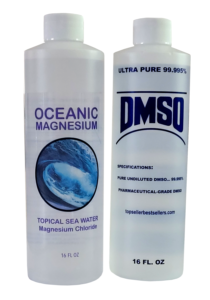
Dimethyl sulfoxide, commonly known as DMSO, has been studied for decades for its unique ability to pass through the skin and carry small molecules with it. Magnesium oil, on the other hand, has become widely appreciated for its role in muscle relaxation, nerve signaling, and cellular calm. Separately, each has value. Together, they introduce an entirely different conversation about neuromuscular tension.
Why Magnesium Matters to Muscles and Nerves
Magnesium plays a central role in muscle function. It helps regulate calcium flow in and out of muscle cells, which directly affects contraction and relaxation. When magnesium is insufficient or poorly absorbed, muscles may contract but struggle to release. This can show up as cramping, tightness, twitching, or deep soreness that resists rest.
Oral magnesium helps many people, but absorption varies widely. Digestive limitations, stress, medication use, and mineral imbalances can all reduce how much magnesium actually reaches muscle tissue. This is why transdermal magnesium—often called “magnesium oil”—has gained attention. Applied to the skin, it bypasses digestion entirely.
Still, even transdermal magnesium can stall at the surface layers, especially when tissues underneath are dense, inflamed, or poorly perfused.
What Makes DMSO Different
DMSO is not just a carrier. It has properties of its own that have been studied for their effects on inflammation, circulation, and cellular signaling. One of its most distinctive characteristics is its ability to move rapidly through skin and connective tissue, temporarily increasing permeability as it goes.
When paired thoughtfully with magnesium oil, the discussion shifts from “topical relief” to something closer to a neuromuscular reset—a deep relaxation of tissue that has been holding tension for years.
Many people who explore this combination describe sensations that feel fundamentally different from surface treatments: warmth that spreads inward, a loosening that seems to travel along muscle fibers, and relief that lasts longer than expected.
The Concept of a Neuromuscular Reset
A neuromuscular reset is not about forcing muscles to relax. It’s about removing the signals that keep them locked in contraction. Chronic pain often involves feedback loops between nerves, muscles, and fascia. Once established, these loops can persist long after the original trigger has passed.
Magnesium supports the electrical side of this equation, helping nerves fire more appropriately and muscles release when they should. DMSO appears to assist by improving access—allowing magnesium to reach deeper tissues while also reducing localized inflammatory signaling.
The result, for some people, is not just pain relief but a sense that the muscle “lets go” in a way it hasn’t before.
Areas Commonly Discussed
This combination is most often explored in relation to:
- Chronic neck and shoulder tension
- Lower back tightness that resists stretching
- Old sports or work-related injuries
- Fibromyalgia-like muscle sensitivity
- Deep trigger points and muscle knots
Rather than acting as a numbing agent, the goal is functional relaxation—muscles returning to a more natural resting state.
A Note on Caution and Respect for the Skin
Because DMSO carries substances through the skin, cleanliness and simplicity matter. This is why discussions around this combination often emphasize minimalism—few ingredients, clean skin, and careful observation. More is not better. Precision and respect tend to produce better outcomes than aggressive experimentation.
This is not a “rub it everywhere” approach. It is usually framed as a targeted exploration, focused on specific areas of long-standing tension.

Why This Combination Is Rarely Discussed
Despite both ingredients being well-known individually, their combination remains underreported. One reason is regulatory discomfort with multi-variable approaches. Another is that DMSO does not fit neatly into modern product categories—it is inexpensive, unpatentable, and requires education rather than branding.
As a result, most conversations about magnesium stop at oral supplements or surface sprays, and most conversations about DMSO remain fragmented or outdated. Yet quietly, many people continue exploring this pairing, not because it is trendy, but because it addresses a depth of tension that other methods often miss.
Muscle pain is not always about damage. Sometimes it’s about communication—signals that never reset, tissues that never fully release, and systems that stay stuck in protection mode. The combination of DMSO and magnesium oil invites a different kind of inquiry. Not louder. Not stronger. Just deeper.
Leave a Reply