Most wounds follow a predictable pattern. They close, calm down, and gradually disappear into the background of life. But some wounds don’t behave that way. They linger. They stall. They improve just enough to give hope, then quietly regress. Non-healing wounds—whether slow-closing cuts, surgical sites that never quite finish the job, or areas of repeated breakdown—often signal that something deeper is interfering with the repair process. It may be circulation, inflammation, microbial load, tissue oxygenation, or simply the body losing momentum at the cellular level.
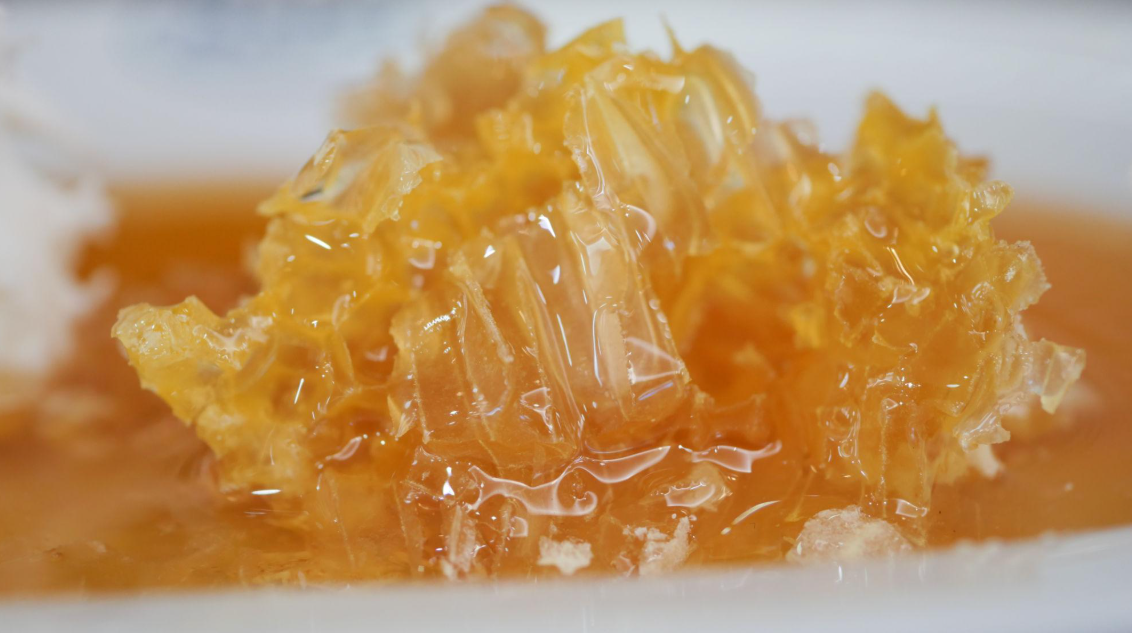
Honey has been used for wound care for thousands of years. DMSO, far newer by comparison, entered medical research in the mid-20th century with an entirely different reputation. Separately, both have long histories. Together, they form a pairing that is rarely discussed today—despite quietly addressing some of the very reasons wounds fail to heal.
Honey: More Than a Surface Remedy
Honey is often described as “antibacterial,” but that word barely scratches the surface of why it has been valued in wound care across cultures. Raw honey creates an environment that is inhospitable to unwanted microbial activity while remaining supportive to living tissue. It draws moisture, supports gentle debridement, and helps maintain a balanced wound environment rather than aggressively sterilizing it.
Historically, honey was used not just because it killed pathogens, but because wounds treated with honey often healed cleaner, with less scarring and fewer complications. Modern interest in varieties such as Manuka honey has revived this conversation, though usually within narrow topical boundaries.
What is less discussed is what happens when honey’s influence remains mostly on the surface, while the deeper tissue beneath the wound remains inflamed, stagnant, or poorly perfused.
Why Some Wounds Refuse to Close
A wound may look superficial while the real issue exists several layers down. Chronic inflammation, low oxygen delivery, hardened or fibrotic tissue, and disrupted cellular signaling can all keep a wound “paused” in the healing process.
Topical applications that stay at the surface may help control symptoms without fully addressing the underlying terrain. This is where the conversation begins to shift from what is applied to how deeply it reaches.
DMSO and Depth of Access
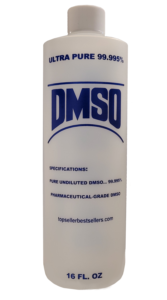
DMSO is known for its unusual ability to move through skin and connective tissue while carrying small molecules with it. Historically, this made it both fascinating and controversial. It didn’t fit neatly into standard treatment models, and it challenged assumptions about how substances should interact with the body.
When discussed alongside honey, DMSO is not framed as a replacement or a cure, but as a depth facilitator—a way to explore whether supportive substances can reach tissue layers that are otherwise difficult to access.
In theory and historical discussion, this pairing shifts honey from being purely a surface agent to something that may influence the wound environment more comprehensively.
A Historical, Not Prescriptive, Conversation
It’s important to note that much of what is known about this combination exists in fragments—older studies, anecdotal reports, battlefield medicine references, and informal practitioner notes. This is not a standardized or widely taught approach, which may explain why it rarely appears in modern wound-care discussions.
What is consistent across these accounts is the idea that stubborn wounds often require more than surface management. They require circulation, signaling, and tissue cooperation to restart.
Cleanliness, Simplicity, and Restraint
Any discussion involving DMSO emphasizes simplicity and cleanliness. Because it transports what it contacts, the environment matters. This is one reason such combinations were traditionally approached with respect rather than enthusiasm. Fewer ingredients. Clear intention. Careful observation.
Honey, in this context, is not treated as a cosmetic or additive, but as a biologically active substance whose effects depend on quality and purity.
Why This Pairing Fell Out of View
There are practical reasons this conversation faded. Honey is inexpensive and unpatentable. DMSO resists commercialization and requires education rather than marketing. Together, they form a solution that doesn’t align well with modern product pipelines or regulatory simplicity.
As wound care became more standardized, multi-variable, individualized approaches were quietly set aside in favor of protocols that were easier to teach, sell, and regulate.

Non-healing wounds are rarely about a single missing ingredient. They are often about access, environment, and timing. The pairing of DMSO and honey invites a different way of thinking—one that respects both ancient wisdom and modern curiosity without rushing to conclusions.
It is not a loud solution. It is a quiet one. And sometimes, quiet approaches are exactly what stalled systems need.
Leave a Reply