Not all pain comes from something new. Some of the most persistent discomfort in the body comes from what is old, injuries long past, surgeries that healed but never fully resolved, and areas where the body adapted, but never quite restored. Scar tissue and adhesions are part of the body’s natural repair process. They are not mistakes. They are quick, efficient, and often lifesaving solutions. But over time, these solutions can become limitations. Tissue that once needed stability can become rigid. Movement becomes restricted. Circulation may diminish. And what once protected can begin to interfere. In these cases, the question is not how to “fix” the body, but how to restore flexibility to what has become fixed.
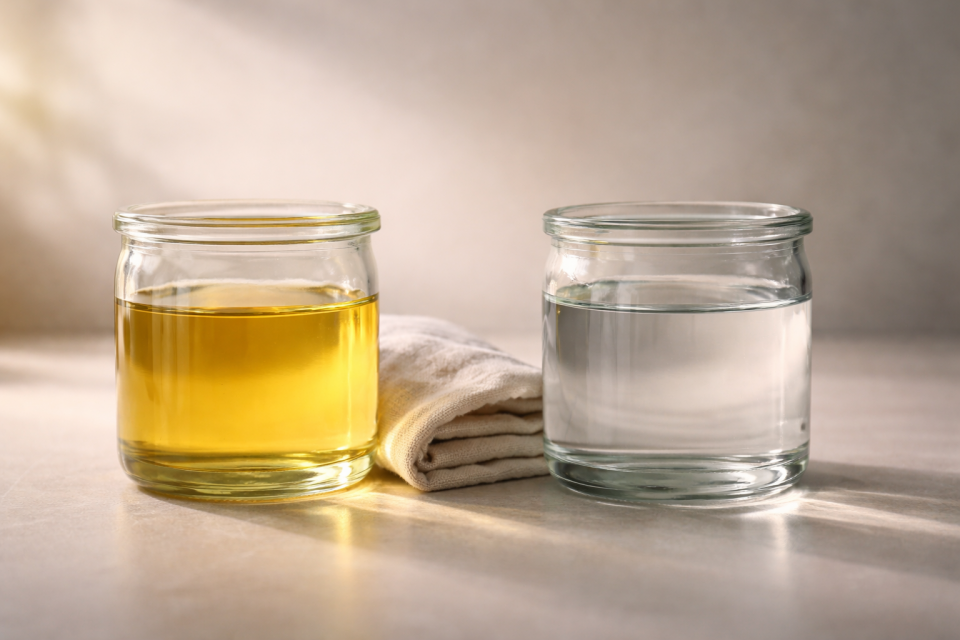
Among the quieter conversations in alternative health circles is the pairing of castor oil packs and DMSO, a combination that brings together traditional practice and modern curiosity around tissue depth and permeability.
Castor Oil Packs: A Tradition of Softening and Flow
Castor oil packs have been used for generations, particularly in naturopathic and folk traditions. Applied externally, often with gentle heat, castor oil is associated with promoting circulation, supporting lymphatic flow, and softening dense or congested tissue.
People have historically used castor oil packs over areas such as:
- The abdomen for digestive and lymphatic support
- Joints for stiffness and restricted movement
- Old injury sites where tissue feels thick or immobile
The experience is typically gradual rather than dramatic. Over repeated applications, tissues may feel more pliable, less restricted, and more responsive.
What castor oil represents in this context is not force, but gentle persistence.
The Nature of Scar Tissue and Adhesions
Scar tissue forms when the body prioritizes rapid repair over perfect reconstruction. Collagen fibers are laid down quickly, often in a dense, unorganized pattern. While effective at closing wounds, this structure lacks the flexibility and elasticity of original tissue.
Adhesions—bands of fibrous tissue that bind structures together—can develop after surgery, injury, or chronic inflammation. They may limit movement, alter biomechanics, and contribute to discomfort that seems disproportionate to visible findings.
One of the challenges with scar tissue is that it exists below the surface. Massage, stretching, and heat may help, but their effects can be limited by how deeply they reach.
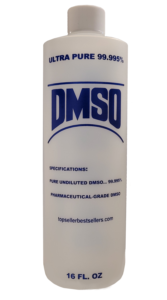
Enter DMSO: A Different Kind of Access
DMSO has been studied for its ability to pass through the skin and into deeper layers of tissue. In historical research and anecdotal discussion, it has also been associated with changes in inflammation, circulation, and tissue permeability.
When brought into conversation with castor oil, DMSO is not positioned as a replacement, but as a potential enhancer of access.
The idea, explored in various informal settings, is that while castor oil supports softening and flow, DMSO may help extend that influence into deeper layers where adhesions and fibrosis reside.
A Meeting of Philosophies: Gentle Meets Penetrating
What makes this pairing unique is the contrast in character.
- Castor oil represents slow, steady, nurturing influence
- DMSO represents direct, penetrating access
Together, they form a concept that is less about force and more about invitation, encouraging tissue to release rather than trying to break it apart.
In discussions of long-standing adhesions, this distinction matters. Aggressive approaches may provoke resistance or inflammation. Gentle approaches, applied consistently and with depth, may be better tolerated by the body over time.
Areas Commonly Discussed
This pairing is often mentioned in relation to:
- Post-surgical scar tissue
- Abdominal adhesions
- Old sports injuries with lingering stiffness
- Joint restriction not explained by acute injury
- Areas where tissue feels “bound” or immobile
Rather than focusing on immediate change, the emphasis is on gradual improvement in mobility, comfort, and tissue responsiveness.
Simplicity and Respect for Process
As with all discussions involving DMSO, simplicity is emphasized. Because it transports substances through the skin, the environment matters. Clean skin. Minimal ingredients. Clear intention.
Castor oil, in its traditional use, is already a simple substance. When combined thoughtfully with DMSO, the approach remains grounded in restraint rather than complexity.
Scar tissue does not form overnight, and it rarely resolves overnight. Any meaningful change tends to unfold over time, through repeated, consistent support.
Why This Approach Is Rarely Highlighted
Castor oil packs are often considered old-fashioned, associated with home remedies rather than modern medicine. DMSO, meanwhile, occupies an unusual place in medical history—well-studied at one time, then largely set aside due to regulatory and commercial challenges.
Together, they form a combination that does not align easily with modern healthcare models. It is not standardized. It is not easily patentable. And it requires a level of personal engagement that falls outside typical clinical frameworks.
As a result, the conversation continues quietly, passed along through experience rather than promotion.

Scar tissue tells a story. It marks where the body chose survival over perfection. But survival does not have to mean permanent restriction.
The pairing of DMSO and castor oil invites a different kind of dialogue with the body—one that values patience, depth, and cooperation over force.
Sometimes, what has hardened does not need to be broken. It simply needs the right conditions to soften again.
Leave a Reply